

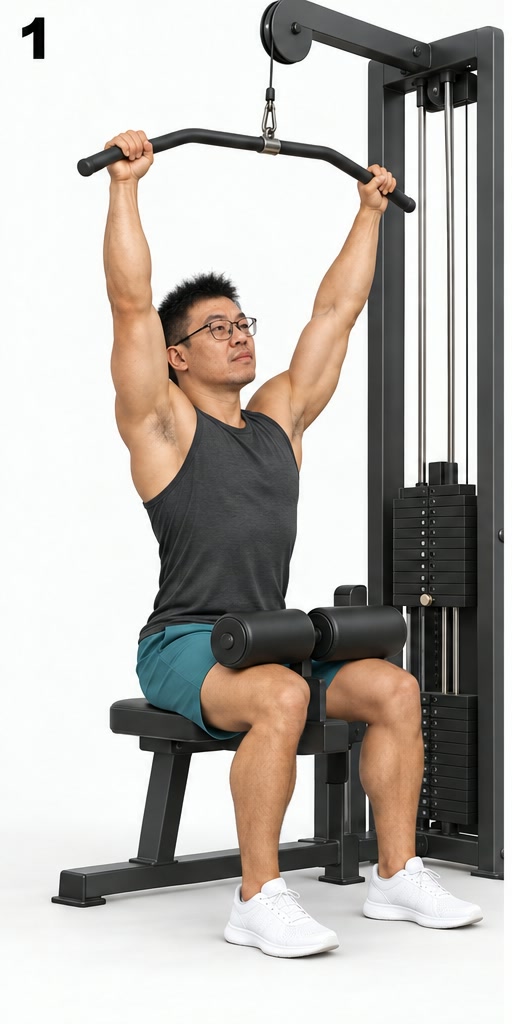
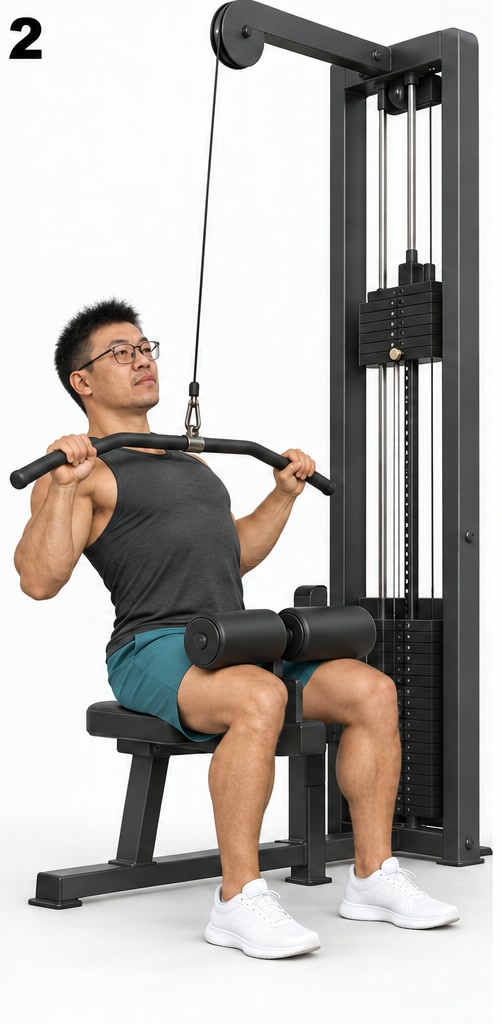
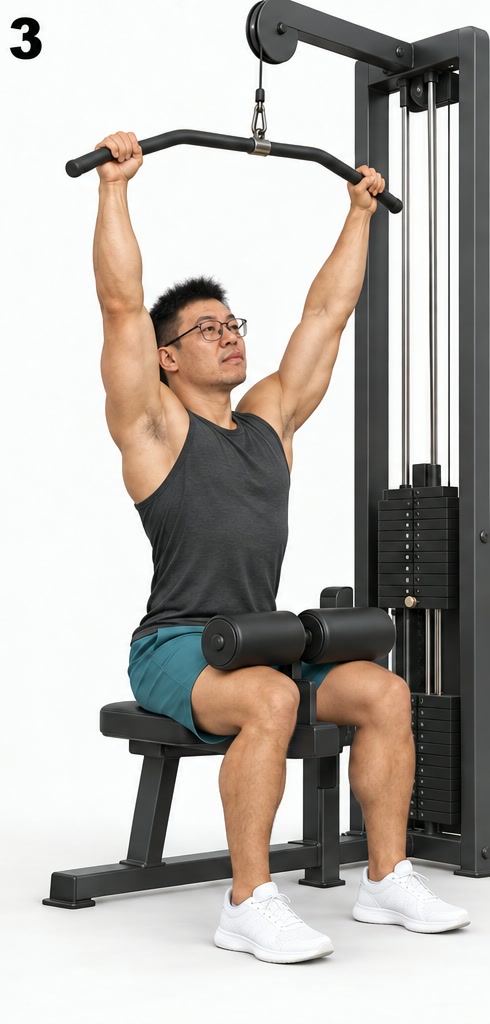
DisclosureAI-generated illustration: the face is based on the site owner's own photos; the body, equipment and background are generated and do not represent his real physique or training records. Tool: built-in image_gen.
Frames were checked by a professional reviewer for movement; follow the written steps and qualified coaching. The image does not depict a real physique or training record.
Steps
- 01
Set-up: sit with the thighs secured under the pad and grip the bar.
- 02
Pull down: drive the elbows down until the bar is close to the upper chest.
- 03
Return: let the bar rise under control, keeping the torso stable.
Common mistakes
- Leaning the torso far back to pull the bar down.
- Pulling the bar behind the neck instead of to the upper chest.
- Shrugging during the pull, without depressing the shoulder blades.
Before logging, know the load basis
This exercise is logged as:
The log page labels the basis next to the input. Different bases are never compared directly or merged into one personal best.
Substitutions
Reviewed and published general substitutions. Use one of these when the station is taken, the equipment is missing, or the movement does not feel right.
- Instead of this exercise, doInverted Row (table or bar)
Equipment needed: Pull-up bar
When it applies: Use when no lat pulldown station is available. It changes a vertical pull into a horizontal one, so the emphasis on the back shifts slightly. (AI-assisted translation, pending review)
Different load basis — re-confirm the weight instead of converting it.
- Instead of this exercise, doPull-up
Equipment needed: Pull-up bar
When it applies: An option once bodyweight pull-ups are possible; reps only. (AI-assisted translation, pending review)
Different load basis — re-confirm the weight instead of converting it.
- This exercise can replacePull-up
Equipment needed: Cable
When it applies: Use when pull-ups fall short of the target reps; the load can be adjusted as needed. (AI-assisted translation, pending review)
Different load basis — re-confirm the weight instead of converting it.
Each substitution is signed off by a reviewer. Program-specific substitutions are offered in the training page instead.
Review statement: steps and common mistakes are written by editors and signed off by a reviewer before publishing. Content marked 'Dev test data' only validates the system and is not training guidance.
Training content is not medical advice. Stop if you feel unwell.