

This English text is an AI-assisted translation pending human review; the Chinese version is authoritative.
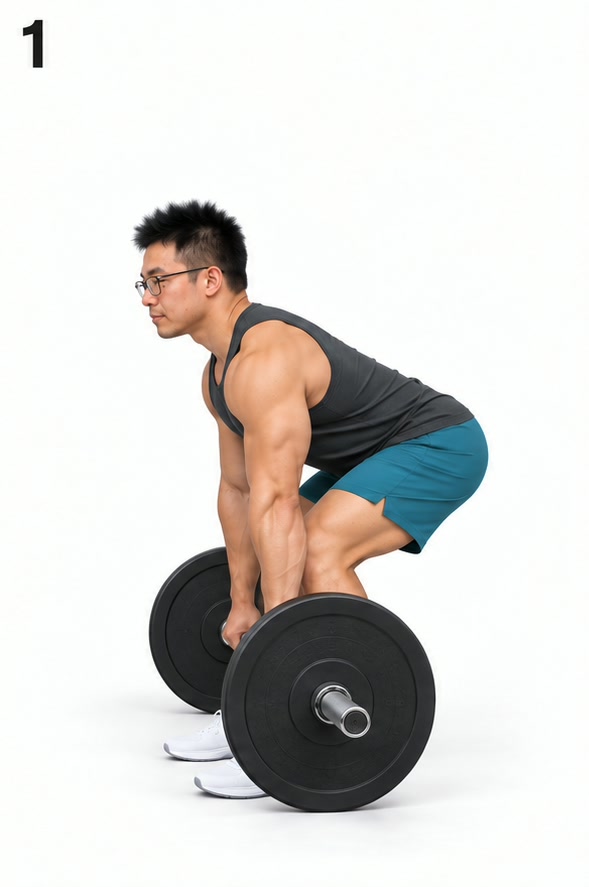
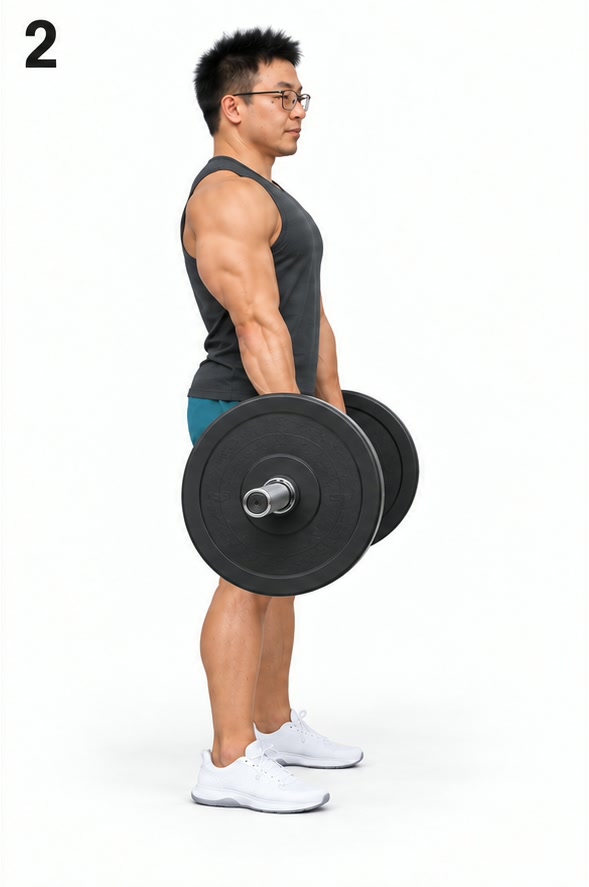
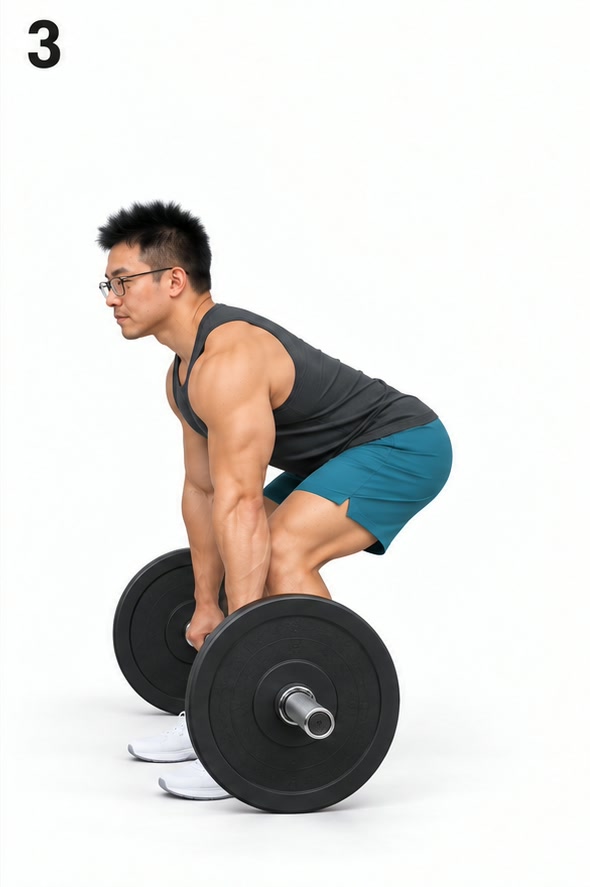
DisclosureAI-generated illustration: the face is based on the site owner's own photos; the body, equipment and background are generated and do not represent his real physique or training records. Tool: built-in image_gen.
Frames were checked by a professional reviewer for movement; follow the written steps and qualified coaching. The image does not depict a real physique or training record.
Steps
- 01
Stand with the feet about hip-width apart, the bar over the middle of the feet and close to the shins.
- 02
Hinge and bend the knees to grip the bar just outside the shins with an overhand grip; shins lightly touching the bar, chest up, back flat, shoulders slightly in front of the bar; tighten the back to take the slack out of the bar.
- 03
Brace the core, push the floor away and raise the hips and shoulders together, the bar travelling straight up close to the legs, until standing tall with the hips fully extended.
- 04
Push the hips back first, then bend the knees, lowering the bar along the legs to the floor under control with the back flat throughout.
Common mistakes
- Rounding the back into a curve as you pull.
- Letting the bar drift away from the body in a forward arc.
- Shooting the hips up first so it turns into a stiff-leg pull.
- Leaning back excessively at the top.
Before logging, know the load basis
This exercise is logged as:
The log page labels the basis next to the input. Different bases are never compared directly or merged into one personal best.
Estimate a 1RM for this lift
Enter the weight and reps of a set taken close to failure to estimate a one-rep max. The formula is public (Epley, epley_v1); it helps you read your own logs, not pick today's load.
Estimate 1RM for Barbell Conventional Deadlift ↗
Shown only for heavy barbell compound lifts: the basis is total bar plus plate weight, which does not apply to bodyweight or isolation movements.
Review statement: steps and common mistakes are written by editors and signed off by a reviewer before publishing. Content marked 'Dev test data' only validates the system and is not training guidance.
Training content is not medical advice. Stop if you feel unwell.